The Crucible of Creation
Building your own beskar'gam is one of the most rewarding parts of being a Mandalorian. Each piece of armour is built to endure the rigors of any convention while keeping the wearer battle ready. There are three main steps when creating armour.

01. Drafting & Measurement
Before you touch a single piece of plastic or foam, you need to create a blueprint. Every body is different, so most pre made templates have to be adjusted. The easiest way to do this would be to use paper mock ups to test the scale of each piece especially any chest or back pieces. Ensuring your armour is proportional to you frame helps prevent any restricted movement.

02. Printing & Forging
Once the templates are done the material of your armour should be decided. Whether this includes high density EVA foam, 3D printed PLA or Resin, and even in some cases metal. If you are printing your armour then the elbow greace starts once the print stops. Achieving a clean finish requires a cycle of sanding, filling and priming. If using foam, forging the armour involves using a heat gun to curve the material to the shape of your body.

03. Detailing & Weathering
This is the part where your personality shines through. The painting stage starts with your base colours before tape is used to mask off any pattens or shapes that will be in different colours. For more intricate details, you can hand-paint unique designs or apply vinyl stickers and decals for a neat finish. Once the paint is o most people decide to then weather the armour. This is done using acrylic washes, silver dry brushing and in some cases real dirt. Once you are happy with the look of the armour it must be protected with either matte or gloss sealant. This insures protection against flaing or natural weather.
Pro Tips for the Forging Grounds

Armour Weathering Secrets
- Don't just paint scratches on top. Start with a metallic base coat, apply a masking fluid where you wan damage, paint your main colour, and then peel the mask away.
- Mix black and brown acrylic paint with plenty of water before slathering over your armour. Wipe it off with a rag before it dries. This gives a greasy battle-worn look.
- Use a matte black airbrush or dry sponge around the edge of the armour plates to simulate blast marks.

Material Optimisation
-Eva Foam: The most beginer friendly and comfortable option. Its incredibly lightweight and affordable, making it perfect for long convention days Always seal your foam with heat or a primer before painting. Otherwise the foam will absorb the paint and leave a dull finish.
- PLA or Resin: Ideal for those wanting high detail and screen accurate shapes. PLA is normally used for the main plates, while the resin is used for greebles or weapons. If you use PLA, avoid leaving the armour in warm places as it can cause the plastic to warp.
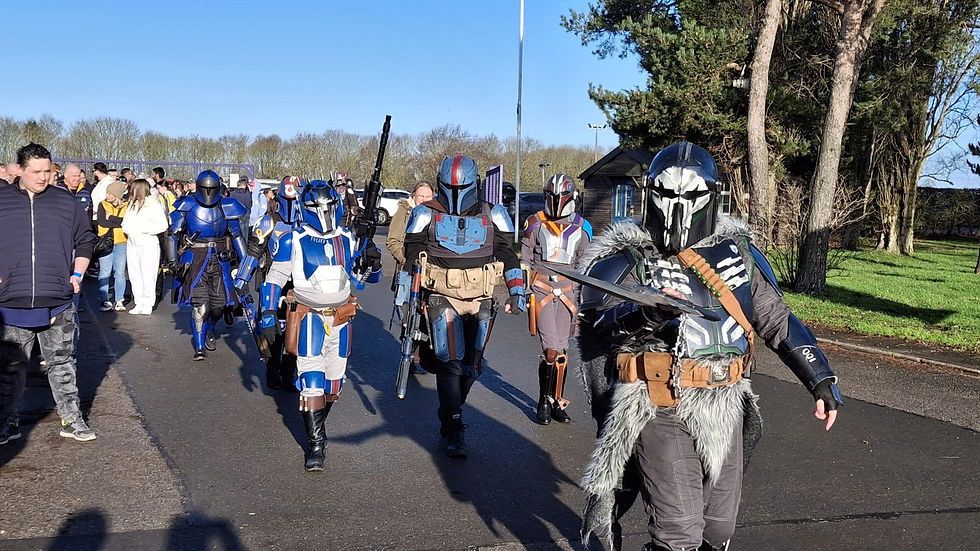
Convention Readiness
Being convention ready means more than just looking good, it means surviving the day:
- Install a small laptop fan inside your helmet to prevent your visor from fogging up and to help keep you cool.
- Always carry an emergency pouch containing industrial strength velcro, super glue, safety pins and a small sewing kit.
- Make sure you either carry a waterbottle to keep you hydrated or find out where refreshment stands are located.